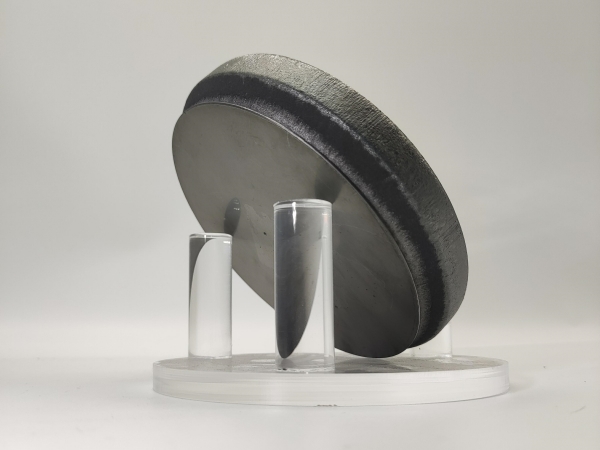
Diamond is widely regarded as one of the most promising materials for next-generation electronics due to its ultra-wide bandgap, extremely high breakdown field, exceptional thermal conductivity, and outstanding chemical stability. These intrinsic properties make diamond an ideal candidate for high-power, high-frequency, and extreme-environment applications.
However, pristine diamond is essentially a
perfect electrical insulator. To unlock its full potential in electronic and functional devices, controlled doping is indispensable.
Despite the extraordinary difficulty of introducing dopants into diamond—caused by its rigid lattice and strong carbon–carbon covalent bonds—research activity in diamond doping remains remarkably high. The field is characterized by a striking asymmetry:
p-type doping is relatively mature, while efficient n-type doping remains one of the greatest challenges in semiconductor science.
This article provides an overview of doping types, doping techniques, and emerging research directions in diamond materials.

1. Doping Types: Clear Success in P-Type, Major Bottlenecks in N-Type
1.1 P-Type Doping: Boron as the Established Solution
Among all dopants, boron is the only element that has been successfully and reliably used for p-type diamond doping.
Dopant: Boron (B)
Mechanism: Trivalent boron substitutes for tetravalent carbon, introducing acceptor states that generate holes
Energy level: Approximately 0.37 eV above the valence band, shallow enough to ionize at room temperature
Key advantages include:Wide conductivity tunability: From semiconducting behavior (~10¹⁶ cm⁻³) to metallic conduction and even superconductivity at very high doping levels (>3 × 10²⁰ cm⁻³)
Excellent thermal stability: Strong B–C bonding ensures stable electrical performance under high temperature and high power conditions
Industrial maturity: Boron-doped diamond is already used in electrochemical electrodes, radiation detectors, and selected power device applications
P-type doping has therefore established the practical foundation of diamond electronics.
1.2 N-Type Doping: The Core Limitation of Diamond Semiconductors
In contrast, efficient n-type doping remains unresolved and represents the primary obstacle to fully functional diamond semiconductor devices.
Investigated dopants: Phosphorus (P), Nitrogen (N)
Mechanism: Pentavalent dopants substitute for carbon and donate excess electrons
Energy levels:
Phosphorus: ~0.6 eV below the conduction band
Nitrogen: ~1.7 eV (very deep level)
Because these donor levels are too deep, only a negligible fraction of dopants ionize at room temperature, resulting in:
Extremely low free electron concentration
Poor carrier mobility
Very high resistivity
Most critically, the lack of reliable
n-type diamond prevents the fabrication of high-quality PN junctions, making bipolar devices, complementary logic circuits, and efficient power conversion architectures exceedingly difficult. This limitation confines diamond mainly to unipolar or terminal device applications.
1.3 Functional and Defect-Based Doping
Beyond conventional conductivity control, diamond supports unique forms of functional doping:
Silicon, sulfur, and other elements: Explored for n-type doping but generally ineffective due to poor activation or deep energy levels
Color center engineering (e.g., NV centers): Formed by nitrogen–vacancy complexes, enabling optically and spin-active states
Key applications include quantum sensing, quantum computing, and high-precision magnetometry
This approach belongs to defect engineering rather than classical semiconductor doping
These capabilities highlight diamond’s dual role as both an electronic and quantum functional material.

2. Doping Techniques: Two Main Technological Routes
2.1 In-Situ Doping during CVD Growth
In chemical vapor deposition (CVD), dopant-containing gases (e.g., B₂H₆ for boron, PH₃ for phosphorus) are introduced during diamond film growth.
Advantages:Good dopant uniformity
Minimal lattice damage
Highly effective for boron-doped p-type layers with superior electrical performance
Limitations:Limited success for n-type dopants such as phosphorus
Requires extremely precise process control and high gas purity
2.2 Ion Implantation
Ion implantation introduces dopants by accelerating ions into pre-grown diamond, followed by high-temperature annealing to activate dopants and repair damage.
Advantages:Precise spatial control of dopant concentration and depth
Essential for selective doping, junction formation, and contact engineering
Critical challenges:Severe lattice damage due to the extreme bonding strength of diamond
Incomplete recovery after annealing, even at temperatures exceeding 1000 °C
Degraded electrical properties, including reduced mobility and increased leakage currents
Risk of graphitization and formation of non-diamond phases
As a result, ion implantation remains a double-edged sword, particularly detrimental for n-type diamond.
3. Summary and Outlook
At present, boron-doped p-type diamond technology is relatively mature, enabling real-world applications in several niche but high-value areas. In contrast, the absence of shallow, efficient n-type dopants and the irreversible lattice damage caused by ion implantation remain the two fundamental barriers preventing diamond from realizing its full semiconductor potential.
To overcome these challenges, several research directions are being actively explored:
Co-doping strategiesIntroducing multiple dopants simultaneously (e.g., B–H or N–Li) to reduce activation energies—still largely theoretical
Surface transfer dopingCreating two-dimensional hole gases via surface adsorbates, bypassing bulk doping limitations and enabling diamond FETs
Heterostructure integrationCombining p-type diamond with established n-type semiconductors such as AlN or GaN to form heterojunction devices
Until these breakthroughs occur, diamond will continue to excel primarily in unipolar devices, extreme-environment electronics, and functional terminal applications. Achieving fully complementary logic and complex integrated circuits will require fundamental advances in diamond doping science.

About JXT Technology Co., Ltd.
JXT Technology Co., Ltd. specializes in advanced diamond materials and their applications. The company provides a stable supply of
single-crystal diamond, polycrystalline diamond, and diamond thin films, serving customers in semiconductor devices, power electronics, quantum technologies, electrochemistry, and extreme-environment applications.
JXT Technology remains committed to advancing diamond material technology and working closely with industry and research partners to accelerate the industrialization of diamond-based electronic and functional devices.