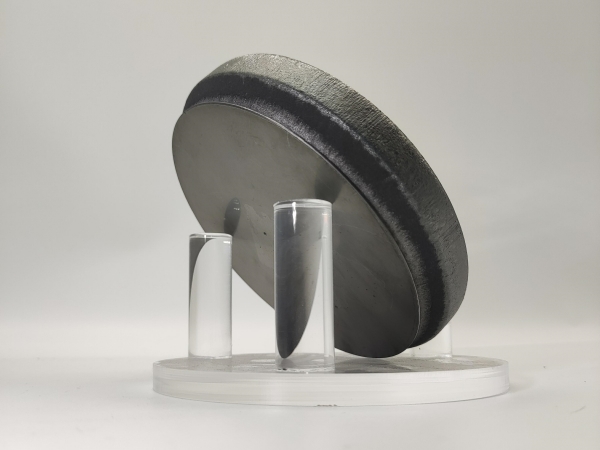
As the third-generation wide-bandgap semiconductor industry develops rapidly, 4H-semi-insulating silicon carbide (4H-SiC) substrates—core carriers for GaN epitaxy—directly determine the performance and reliability of downstream RF and power devices. Procurement quality is critical for controlling production efficiency and reducing costs. Many buyers mistakenly prioritize "more parameters" or "low price" while ignoring scenario-matching indicators. Below are 6 core technical parameters to focus on, helping you avoid pitfalls and align with procurement needs.

I. Crystal Parameters: Foundation for GaN Epitaxy
Crystal quality directly impacts GaN epitaxial defect density and device reliability. Key indicators:
1. Crystal Form & Orientation: Choose
4H-type substrates with <0001> orientation (optimal for GaN matching). Control orientation deviation within ±0.2° (industrial-grade) or ±0.5° (R&D-grade) to prevent epitaxial growth issues.
2. Crystal Integrity: Micropipe density ≤1 ea/cm² (industrial) or ≤15 ea/cm² (R&D); inclusion density ≤1 ea/cm²; 4H crystal ratio ≥99.9% (no obvious hexagonal voids) to ensure uniformity.
3. Rocking Curve FWHM: (0004) plane ≤60 arcsec (general), ≤45 arcsec (high-end RF) to reduce dislocation defects.
II. Electrical Parameters: Benchmark for Core Performance
Electrical properties determine parasitic loss and insulation stability, with resistivity as the core:
1. Resistivity: ≥10¹⁰ Ω·cm (high-frequency RF devices) to avoid signal leakage; ≥10⁵ Ω·cm (ordinary power devices) with full-wafer uniformity deviation ≤5%.
2. Doping Uniformity: Ensure uniform vanadium doping to prevent local resistivity fluctuations and inconsistent GaN epitaxial performance.
III. Mechanical & Geometric Parameters: Ensure Production Adaptability
These parameters affect processing adaptability and epitaxial stability. Focus on:
1. Dimensional Specifications: Choose 4-inch/6-inch (mainstream) or 8-inch (emerging) standardized sizes, matching your wafer production line and epitaxial equipment.
2. Flatness & Thickness: TTV ≤5μm, LTV ≤2μm (5mm×5mm), warpage ≤20μm, bow -15μm~15μm; surface roughness (Ra) ≤0.2nm to avoid epitaxial cracking.
3. Edge Quality: No chippings (≤0.2mm width/depth), cracks or gaps; chamfered edges to prevent damage and improve wafer utilization.
IV. Surface Quality: Direct Guarantee for Epitaxy
Surface quality determines epitaxial effect. Key requirements:
1. Surface Defects: No orange peel, pits, scratches or contamination; particles ≥0.3μm ≤60/wafer; total scratch length ≤wafer diameter.
2. Surface Treatment: Prioritize CMP-treated "epi-ready" substrates to reduce subsequent processing costs.
V. Impurity & Thermal Parameters: Boost Device Reliability
These long-term impact device stability and cannot be ignored:
1. Impurity Content: Metal impurities ≤5×10¹² atoms/cm² to prevent leakage and performance degradation.
2. Thermal Conductivity: 350~450 W/(m·K) to ensure efficient heat dissipation for high-frequency/high-power devices.
VI. Supplementary Procurement Suggestions
Match parameters to your scenario: strict resistivity/crystal quality for RF; focus on dimensions/thermal conductivity for power devices; balance cost-parameters for R&D.
Request complete test reports from suppliers; prioritize those with stable large-scale production to avoid batch deviations and production interruptions.
In summary, focus on scenario-matching core parameters—avoid blind pursuit of high-end specs or neglect of basics. These 6 parameters ensure you align with production needs, control costs and improve device yield.