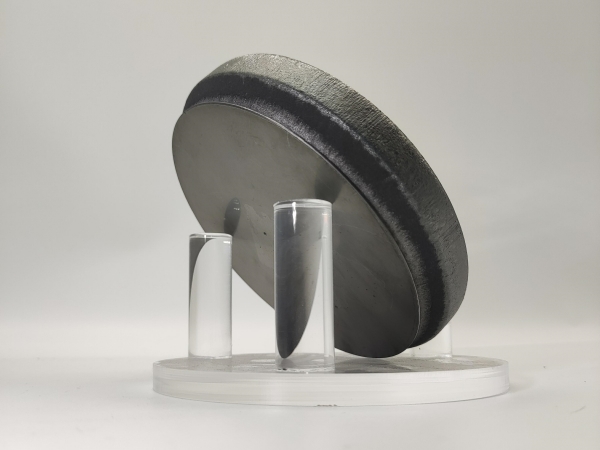
High-borosilicate glass wafers and quartz glass wafers are widely used semiconductor substrate materials in MEMS devices, semiconductor packaging, optoelectronics, and advanced wafer processing systems.
Although both materials are based on SiO₂ glass systems, their differences in thermal stability, optical transmission, chemical resistance, purity level, and electrical performance result in significantly different roles in semiconductor manufacturing.
This page provides a technical and application-oriented comparison to help engineers, procurement teams, and semiconductor manufacturers select the right material for their process requirements.
1. What Are Semiconductor Glass Wafers?
High-Borosilicate Glass Wafer
High-borosilicate glass wafer is a multi-component engineered glass material typically composed of:
- 12%–15% B₂O₃
- 80% SiO₂
- Small amounts of Al₂O₃ and other metal oxides
- Typical grade: BF33 borosilicate glass
It is widely used as a cost-effective semiconductor substrate material for standard manufacturing processes.
Quartz glass wafer is made from high-purity fused silica with:
- SiO₂ purity >99.9% (up to 99.999% for synthetic quartz)
- Ultra-low metal impurity content (<0.2 ppm)
It is considered a high-performance semiconductor material for advanced processes such as DUV lithography and high-temperature wafer processing.

2. Material Properties Comparison
2.1 Thermal Performance
High-borosilicate glass wafer:
- Thermal expansion coefficient: ~3.3 × 10⁻⁶/K
- Operating temperature: up to ~450°C
- Suitable for standard semiconductor thermal processes
Quartz glass wafer:
- Extremely low thermal expansion (~1/6 of borosilicate glass)
- Long-term use temperature: up to 1100°C
- Softening point: ~1780°C
- Excellent thermal shock resistance
► Quartz glass is the preferred material for high-temperature semiconductor processes and furnace applications.
2.2 Optical Properties
High-borosilicate glass wafer:
- High transmittance in visible and near-infrared (>90%)
- Limited deep UV transmission (<300 nm)
- Low fluorescence compared to soda-lime glass
Quartz glass wafer:
- Excellent deep UV to near-IR transmission
- High optical uniformity and refractive stability
- Suitable for DUV lithography and photonic applications
► Quartz glass is essential for DUV lithography and optical semiconductor systems.
2.3 Chemical Resistance & Purity
High-borosilicate glass wafer:
- Good acid resistance
- Moderate chemical durability
- Higher metal impurity content compared to quartz
Quartz glass wafer:
- Excellent resistance to acids, alkalis, and process gases
- Ultra-high purity (ultra-low contamination risk)
- Ideal for cleanroom semiconductor environments
► Quartz glass is preferred for ultra-clean semiconductor manufacturing processes.
2.4 Electrical Properties
High-borosilicate glass wafer:
- Stable dielectric properties
- Suitable for standard insulation applications
Quartz glass wafer:
- Ultra-high resistivity
- Low dielectric loss
- Ideal for high-frequency and high-voltage semiconductor devices
3. Semiconductor Application Areas
3.1 High-Borosilicate Glass Wafer Applications
High-borosilicate glass wafers are widely used in mid-to-low-end semiconductor manufacturing, including:
- MEMS device substrates and structural layers
- Silicon wafer bonding (matched thermal expansion reduces stress)
- IC packaging insulating substrates
- Semiconductor carrier wafers and protective spacers
- Microfluidic chips and lab-on-chip devices
- Low-end optoelectronic sensors
► Ideal for cost-sensitive, high-volume semiconductor production
3.2 Quartz Glass Wafer Applications
Quartz glass wafers are critical materials for advanced semiconductor processes, including:
- DUV lithography mask substrates
- Furnace tubes, quartz boats, wafer carriers
- High-temperature oxidation, diffusion, and etching processes
- RF and high-frequency semiconductor device substrates
- High-end IC packaging cover plates
- Photonic and optical communication devices
► Essential for advanced nodes, high-temperature processing, and ultra-precision manufacturing
4. Machining Process & Cost Comparison
High-Borosilicate Glass Wafer
- Mature manufacturing process
- Standard grinding and polishing techniques
- Moderate cleanroom requirements
- Stable raw material supply
- Lower production cost
► Cost advantage: 1/3 to 1/5 of quartz glass wafers
Quartz Glass Wafer
- High-temperature melting and precision forming
- Ultra-precision polishing required
- Strict cleanroom manufacturing environment
- Longer production cycle and higher defect control requirements
- Higher equipment and processing cost
► Designed for high-performance semiconductor applications with strict process requirements
5. How to Choose the Right Semiconductor Glass Wafer?
Choose High-Borosilicate Glass Wafer If:
- Cost efficiency is a priority
- Operating temperature is below 450°C
- Application includes MEMS, packaging, or microfluidics
- Standard semiconductor purity is sufficient
Choose Quartz Glass Wafer If:
- High-temperature processes (>1000°C) are required
- Application involves DUV lithography or photonics
- Ultra-high purity and low contamination are critical
- RF, optical, or advanced semiconductor devices are involved
6. Conclusion: Strategic Material Selection for Semiconductor Manufacturing
In semiconductor manufacturing, material selection directly impacts
yield, process stability, and production cost efficiency.
- High-borosilicate glass wafers provide a cost-effective solution for standard semiconductor and MEMS applications
- Quartz glass wafers enable advanced semiconductor processes requiring ultra-high purity, thermal stability, and optical precision
Selecting the correct substrate material is a critical engineering decision that supports both manufacturing efficiency and long-term device performance.