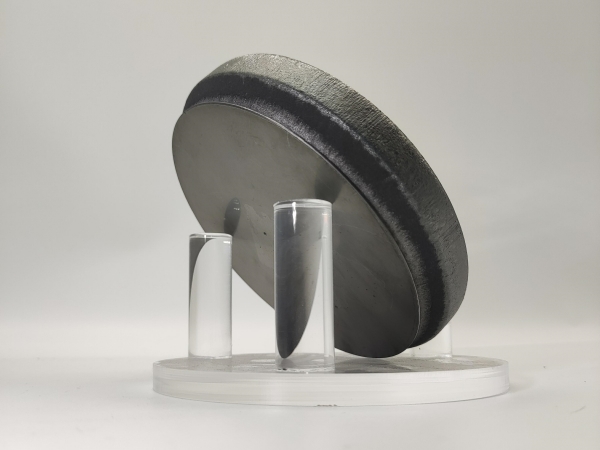
As the core material of the third-generation wide-bandgap semiconductors, Silicon Carbide (SiC) breaks through the physical limits of traditional silicon-based devices with its intrinsic advantages of high critical breakdown electric field, excellent thermal conductivity and high electron mobility, becoming the core choice for power devices in high-end fields like new energy vehicles and photovoltaic energy storage. As the "functional core layer" of the device, the SiC epitaxial layer is a key bridge connecting the substrate and the device structure. Its growth quality, thickness control, doping accuracy and defect management directly determine the device’s energy conversion efficiency and long-term reliability, serving as the core support for performance improvement.

I. The Core Role in Improving Device Efficiency
The core indicators of device efficiency are energy conversion losses (conduction and switching losses) and power density.
SiC epitaxial layers reduce losses and improve efficiency fundamentally by optimizing carrier transport, electric field distribution and structural adaptability, mainly in three aspects.
(1) Optimize Electric Field Distribution and Reduce Conduction Loss
Conduction loss is closely related to the drift region resistance. With a critical breakdown electric field about ten times that of silicon, the SiC epitaxial layer can be thinner and more highly doped under the same blocking voltage. Its on-resistance follows the formula

, where thickness is positively correlated with resistance and doping concentration is negatively correlated. High-quality epitaxial layers ensure precise doping and uniform thickness, reducing conduction loss by over 60% compared with silicon-based devices, and the specific on-resistance of 1200V SiC MOSFET can be less than 1/10 of silicon-based IGBTs.
(2) Inhibit Carrier Storage Effect and Reduce Switching Loss
Switching loss is prominent in high-frequency scenarios. High-quality epitaxial layers inhibit the carrier storage effect, shorten switching time, and eliminate the current tailing phenomenon of silicon-based IGBTs, resulting in low temperature-dependent turn-off loss. For example, reducing the epitaxial thickness of 1200V SiC MOSFET from 15μm to 12μm can lower turn-off loss by 12%–15%. Precise parameter matching also reduces junction capacitance, further cutting charging and discharging losses.
(3) Improve Power Density and Realize Miniaturization
The high critical breakdown electric field and thermal conductivity of the epitaxial layer support higher power density. Its thinning design reduces the chip area to 1/5–1/10 of silicon-based devices, improving integration. With thermal conductivity three times that of silicon, it dissipates heat quickly to avoid efficiency degradation. In new energy vehicle on-board chargers, high-quality epitaxial layers enable power density over 2kW/L and conversion efficiency over 98%.
II. The Key Role in Enhancing Device Reliability
Device reliability is crucial for high-end scenarios. SiC epitaxial layers inhibit failure and extend service life through defect control, electric field buffering and environmental isolation, focusing on three aspects.
(1) Control Epitaxial Defects
Epitaxial defects (e.g., microtubules, dislocations) are the main causes of device failure. Using 4°-8° off-angle substrates and step-flow growth, and adjusting the C/Si ratio to 1.2-1.5, the defect density can be controlled below 0.1 cm⁻². Every order of magnitude reduction in defect density increases the device’s long-term reliability by 2-3 orders of magnitude. The epitaxial layer also filters substrate native defects, reducing gate oxide breakdown risks.
(2) Adapt to Extreme Working Conditions
SiC devices are used in high-voltage, high-temperature and high-radiation scenarios. The epitaxial layer’s wide-bandgap characteristic allows it to withstand 600℃, far higher than silicon-based devices’ 150℃, meeting the automotive-grade requirement of reverse leakage current ≤1μA at 200℃. A 10%–20% thickness safety margin ensures uniform electric field and avoids avalanche breakdown. Thick epitaxial layers also reduce radiation-induced leakage current.
(3) Optimize Interface Characteristics
High growth quality ensures good interface flatness (≤0.5nm) and lattice matching, reducing interface defects. Optimized processes reduce SiC/SiO₂ interface state density to below 1e11 cm⁻²·eV⁻¹, with threshold drift within 5% under 1000 hours of high-temperature reverse bias. As a buffer layer, it alleviates stress and reduces cracking risks.
III. Synergistic Impact of Key Parameters
Epitaxial thickness and doping concentration balance efficiency and reliability: thin layers improve efficiency but reduce voltage resistance; thick layers enhance reliability but increase losses. Automotive-grade 1200V SiC MOSFET uses 12–14μm epitaxial layers to ensure ≥5μs short-circuit withstand time. Thickness and doping uniformity (±1.5% and ±5% for automotive grade) are essential, and HTCVD technology achieves precise control.
IV. Summary and Outlook
As the "functional core" of SiC devices, the epitaxial layer achieves dual improvement of efficiency and reliability, enabling conversion efficiency over 99% and long-term failure rate below 1ppm. With the iteration of epitaxial technology, it will develop towards "thinner, more uniform, lower defects", promoting large-scale application. Future technological breakthroughs will further release SiC potential, supporting the upgrading of new energy and electronic information industries.